Foreclosure Bargains in Albuquerque and How to Vet Them
Start by identifying which kind of sale you're looking at: a lender foreclosure or a state tax auction. Then pull the official sale notice, the court and county records, and build a conservative repair and possession plan. If the numbers still work after that, you've found a bargain. If they don't, walk away.
Are Foreclosure Bargains in Albuquerque Real, and How Do You Find Them?
Foreclosure bargains in Albuquerque are real, but the discount is never guaranteed and rarely obvious from a listing page. The bargain only exists after you verify the type of sale, the title and liens, the property's condition, and who is living in it. In New Mexico, lender foreclosures run through the courts and delinquent-tax sales are state auctions, so your first job is knowing which one you're looking at.
Key Takeaways
- Bernalillo County does not conduct mortgage-foreclosure sales; those are private sales by banks and mortgage companies, separate from state property-tax auctions.
- New Mexico does not hold tax-lien, tax-certificate, or tax-deed sales; the State Taxation and Revenue Department's Property Tax Division runs delinquent-property auctions, generally for properties with two or more years of unpaid taxes.
- Judicial-sale notices must be published for four weeks and posted in six public places, which gives you time to research a property before you bid.
- A low minimum bid is a starting point for bidding, not a purchase price, and condition, title, and possession problems can erase a discount.
- Rio Rancho-area parcels appeared in a September 30, 2026 state tax auction advertisement, and those sales are handled through Sandoval County and the state, not Bernalillo County.
How Do You Find Foreclosure Bargains in Albuquerque Without Getting Burned?
Sort every lead into the right category first, because a lender foreclosure and a state tax auction are different legal processes with different risks. Then treat the official sale notice, not a third-party listing page, as your source of truth.
When I talk with buyers about foreclosures, the most common mix-up is assuming "foreclosure" means one thing. It doesn't. Here's how the two main routes compare.
| Question | Lender mortgage foreclosure | State property-tax auction |
|---|---|---|
| What triggers it | A mortgage default | Generally two or more years of delinquent property taxes |
| Who runs it | The lender, through a district-court case and judicial sale | The New Mexico Taxation and Revenue Department's Property Tax Division |
| Where the controlling notice comes from | The court sale notice | The state's official auction advertisement |
| What to research first | Court case file, judgment, assignments, recorded liens | County records, tax status, legal description, occupancy |
The Bernalillo County Treasurer draws this line clearly: private foreclosure sales by banks and mortgage companies are one thing, and state property-tax auctions are another. The county treasurer also notes that the state and counties do not conduct tax-lien, tax-certificate, or tax-deed sales.
How a lender foreclosure works in New Mexico
For qualifying home loans, New Mexico uses judicial foreclosure. The lender generally has to file a complaint in district court and establish its right to foreclose, and the New Mexico Courts note these cases can take several months. Before filing, a covered residential borrower gets a right-to-cure notice that identifies the default, the amount needed to cure, and a cure date at least 30 days after delivery.
Why does that matter to you as a buyer? Because the borrower can cure, the case can settle, or the sale can be postponed. A property on an auction site today may not sell on that date. If you want more background on how this plays out locally, I covered it in Foreclosures and Navigating Albuquerque's Unique Market.
Why Albuquerque and Rio Rancho are handled differently
Rio Rancho sits in Sandoval County, so state tax-auction information comes through Sandoval County notices and the state, not Bernalillo County. The Sandoval County Treasurer states that state public auctions are held for properties with two or more years of delinquent taxes and that mortgage foreclosures remain separate private proceedings.
The state's September 30, 2026 Sandoval County auction advertisement included parcels described as being in Rio Rancho, including some near Patricia Road and 17th Avenue NE. Those were tax-delinquency auctions, not ordinary lender foreclosures, and the cities themselves don't sell them.
The third route: bank-owned listings
Some foreclosed homes end up bank-owned and get listed like any other property. Those sales usually run through a standard contract process, so inspections and financing are generally part of the conversation, though every lender sets its own terms. If you want the discount potential of a distressed property with fewer unknowns, this is the route I'd ask you to consider first.
What Should You Check Before Bidding on a Foreclosure?
Check the legal description, the court file, recorded liens, property-tax status, occupancy, and condition before you bid, and get advice from a New Mexico foreclosure attorney and a title professional on which interests are wiped out and which survive. A third-party auction page can give you a lead, but it can't give you answers on any of those.
Here's the sequence I'd follow:
- Identify the exact legal description so you're researching the right parcel.
- Get the official documents: the foreclosure complaint, judgment, and sale notice for a lender sale, or the state's auction advertisement for a tax auction.
- Review county ownership and lien records, including assignments and releases.
- Check property-tax status and investigate municipal or association claims where they apply.
- Find out whether the property is occupied.
- Arrange an exterior inspection where lawful.
- Talk to a New Mexico foreclosure attorney and a title professional before you commit money.
For Albuquerque lender sales, the Bernalillo County court and land-record trail is where I start. Recent auction listings have shown the Second Judicial District Courthouse on Lomas Blvd. as the sale location, but auction dates and locations can change, so verify the specific notice. The notice issued through the court or the state controls the sale date, bidding requirements, deposit rules, payment deadline, and any postponement or redemption information. A listed property can be postponed, cancelled, redeemed, or sold on terms different from an aggregator's summary.
Title and liens: what could follow you home
Winning a sale doesn't automatically mean a clean slate. Some interests are extinguished by the sale and others may survive, and unpaid taxes or other claims can complicate things. That's a question for your attorney and a title company before you bid, not after. Ask early whether title insurance is available on the specific property, since that depends on the title company's review of the record.
Condition: what you can't see costs the most
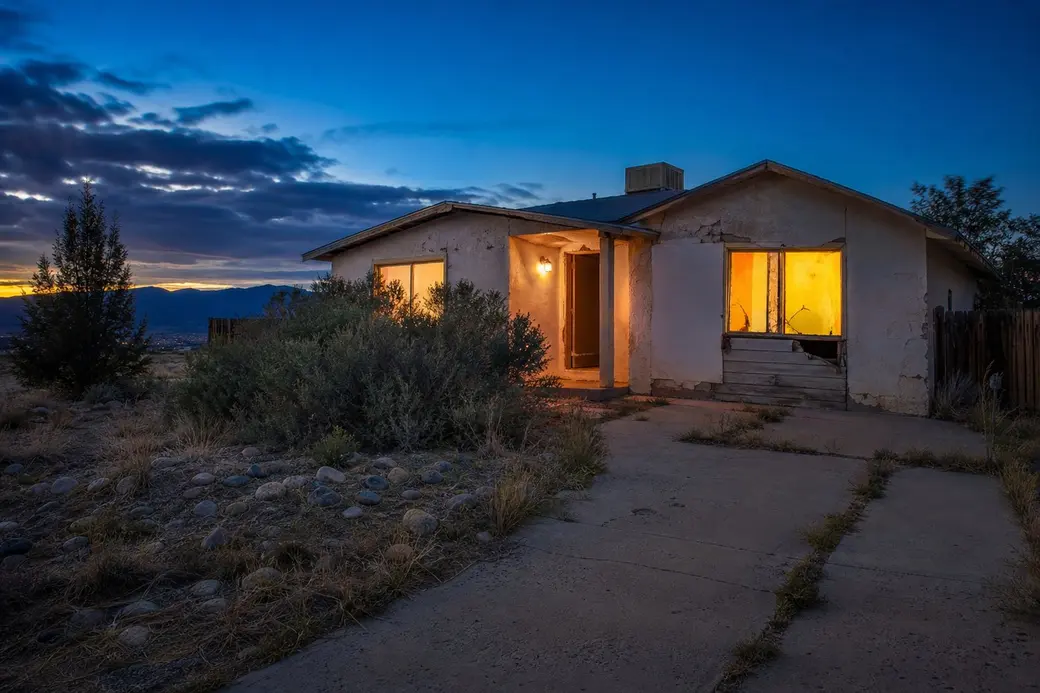
Foreclosure buyers often get limited or no interior access before bidding. A property can have deferred maintenance, vandalism, missing fixtures, unauthorized occupants, environmental issues, or unpermitted work. Your projected discount has to survive a conservative repair estimate, not just a comparison to the last sale price or an online value estimate. Our post on repairs that matter in Rio Rancho and Albuquerque shows what buyers and sellers in this market pay attention to.
Possession: title and keys are two different things
Winning the auction doesn't necessarily mean you get a vacant house. If occupants remain, you may need to follow New Mexico's lawful post-sale possession and eviction procedures, and the route depends on the sale documents, occupancy status, and court orders. I wouldn't trust anyone who promises you a fixed move-out timeline without reading the specific case.
Is a Low Opening Bid Actually a Bargain?
Not by itself. A minimum bid tells you where the bidding starts, not what the property is worth, what it needs, or what it takes to get possession. The 2026 Rio Rancho-area parcels in the state's advertisement showed very low minimum bids, but a minimum bid doesn't establish market value, condition, title quality, occupancy, or repair cost.
To decide whether a foreclosure is a true bargain in this market, I'd have you answer four questions:
- What do recent comparable sales support for the property in good condition?
- What would a cautious repair budget look like, with room for surprises?
- What's your plan if the property is occupied or the sale is postponed?
- Can you pay by the deadline in the official notice, and how are you funding it?
That last one matters. Auction sales commonly carry tight payment deadlines, which is why many buyers come with cash or line up funding well in advance. Confirm the exact requirements in the sale notice, and talk to your lender early if financing is part of your plan.
This is where local numbers matter more than anything I can put in a blog post. Your real figure depends on the specific house, its condition, and your timeline, and that's the kind of analysis I run with clients before they place a bid. Foreclosures, REO, and short sales are some of the areas I specialize in, and my team can pull recent comparable sales so you're measuring against facts, not hope. If you're comparing options, how short sales work in Albuquerque is another distressed-property route worth understanding, and Albuquerque real estate investing tips covers the numbers investors run. If you're newer to buying, start with the Albuquerque market for first-time buyers.
Curious how clients feel about working with us? You can read reviews on Google and Zillow.
FAQ
How do I find legitimate foreclosure auctions in Albuquerque?
Use official sources first: the district court's sale notice for a lender foreclosure, and the New Mexico Taxation and Revenue Department's advertisement for a tax auction. Third-party auction sites can point you to leads, but the official notice controls the date, location, bidding requirements, and deposit rules. Judicial-sale notices must run for four weeks in a county newspaper and be posted in six public places.
What is the difference between a mortgage foreclosure and a New Mexico tax-property auction?
A mortgage foreclosure is a lender enforcing its loan, usually through a district-court case and a judicial sale. A tax-property auction is run by the state for delinquent property taxes, generally two or more years' worth. Bernalillo County's treasurer says these are separate processes, so the research you do on each is different.
Do I need to inspect an Albuquerque foreclosure before bidding?
You should try, but interior access is often limited or unavailable, so plan for it. Arrange an exterior inspection where lawful, review the records, and build a conservative repair budget that assumes you'll find problems. Bank-owned listings that go through a regular contract process more often allow a full inspection.
Can I finance a foreclosure bought at auction, or do I need cash?
Many auction buyers pay cash because payment deadlines in the sale notice can be tight, but your options depend on the specific sale terms. Read the notice for the payment deadline, and speak with your lender before bidding to see whether any financing can work on that timeline. Bank-owned homes sold through standard contracts generally leave more room for financing.
Are Rio Rancho tax-delinquent properties sold by the city, Sandoval County, or the state?
The state sells them. The New Mexico Taxation and Revenue Department's Property Tax Division conducts delinquent-property auctions, with notices tied to Sandoval County for Rio Rancho properties in that county. Check the county before you research anything else, since Rio Rancho spans more than one jurisdiction's records.
Foreclosure bargains in Albuquerque go to the buyers who do the research others skip: the right category of sale, the official notice, the title trail, a realistic repair number, and a plan for possession. If you want a second set of eyes on a property or a straight answer on whether the numbers work, schedule a consultation and we'll go through it together. If you're also thinking about selling a home, you can request a free home evaluation.
Equal Housing Opportunity. Nathan Smith, Qualifying Broker, licensed in New Mexico and regulated by the New Mexico Real Estate Commission. This article is general information, not legal, tax, or financial advice; confirm your own numbers with your closing agent, tax advisor, or lender.
Categories
Recent Posts